


The drive itself is shorter than most people expect. The appointment around it is longer. That gap is where the stress comes from: you book a road test, you assume you will be in and out, and then you find yourself queuing at check-in with twenty minutes to spare and no idea whether that is normal.
Here is what actually happens at an ICBC road test, how long each part takes, and how to plan the day so nothing about it is a surprise.
Key takeaways
- The drive is usually 30 to 45 minutes. Budget about an hour for the whole appointment.
- ICBC does not publish an official road test duration, so treat any exact number, including ours, as a planning estimate rather than a promise.
- Check-in, the vehicle check and the feedback afterwards are what turn a short drive into a long appointment.
- Your test does not start until the examiner accepts your vehicle. A burnt-out brake light can end the appointment before you drive.
- From 19 October 2026 most novice drivers will not take a second road test at all.
How long does an ICBC road test take?
Plan for roughly 30 to 45 minutes behind the wheel, and about an hour from the moment you walk in to the moment you leave.
One honest caveat, because you will find confident-sounding numbers all over the internet: ICBC does not publish a standard road test duration. There is an official figure for the Enhanced Road Assessment, which runs about 90 minutes, but that is a re-examination for drivers referred for a medical or fitness review. It is not the Class 5 or Class 7 test, and quoting it as though it were is one of the more common pieces of misinformation about BC road tests.
The range above is what we see week after week with our own students across the Tri-Cities. It is reliable enough to plan around, and vague enough to be honest about.

The drive is short, but the appointment is bigger
Most learners think about the test as the driving. In practice the appointment has several stages, and knowing them is what stops the day feeling chaotic:
- Arrival and check-in. ICBC’s instruction is simply that you must arrive at your check-in time. In practice, get there earlier than that. Parking at a licensing office at a busy hour is its own small adventure.
- Documents. You need one primary piece of ID and one secondary piece, plus payment for the road test fee.
- Vehicle check. The examiner walks around the car and confirms the basics work: signals, brake lights, headlights, seatbelts, mirrors, windshield.
- Instructions. Before you move, the examiner explains how directions will be given and what they expect.
- The drive. The part everyone worries about, and the shortest part of the morning.
- Result and feedback. You are told whether you passed, and usually what stood out either way.
Add those up and a 35-minute drive becomes an hour of your day. If the office is busy, the weather is poor, or something on the car needs a second look, it can run longer.
What the examiner is checking
The examiner is not looking for a flawless drive. They are looking for control, observation, judgment and the ability to follow the rules without being prompted, held consistently for the whole route rather than for the first five minutes.
In practice that means smooth starts and stops, correct lane position and signalling through turns, real shoulder checks on lane changes, sensible speed for the conditions rather than just the posted limit, a parking manoeuvre or two, and clean decisions at intersections and crosswalks.
We have written about the scoring in detail elsewhere, so this article will not repeat it. If that is what you actually came for, read how the ICBC Class 5 road test is scored, and the common ICBC road test mistakes that quietly cost people points.
Why the length varies
Three things move the number more than anything else.
Which test you are taking. A Class 7 test tends to stay closer to the licensing office on residential and moderate streets. A Class 5 test asks for more independence and a broader route, so it usually runs at the longer end of the range.
Where you are testing. Every Tri-Cities road test runs out of the licensing office at 1930 Oxford Connector in Port Coquitlam, and the routes around it are their own thing. Local knowledge genuinely changes how the drive feels, which is why we wrote a guide to the Port Coquitlam test routes.
Traffic and weather. A mid-morning test on a dry Tuesday moves faster than one booked at school pickup in November rain. Wet roads mean lower speeds, longer following distances and more cautious turns, and all of that adds minutes.
What ICBC needs before your test can start
Your road test does not really begin until the examiner accepts the vehicle. ICBC asks for a safe, reliable and insured vehicle with a Canadian licence plate, and they check it properly.
Things that can stop the test before it starts:
- Seatbelts, brake lights, signal lights or headlights not working.
- Dashboard warning lights showing that affect safe operation, an airbag light being the classic one.
- A cracked or illegally tinted windshield.
- Anything that makes the car unsafe or not road legal. In ICBC’s words, they may have to cancel your test.
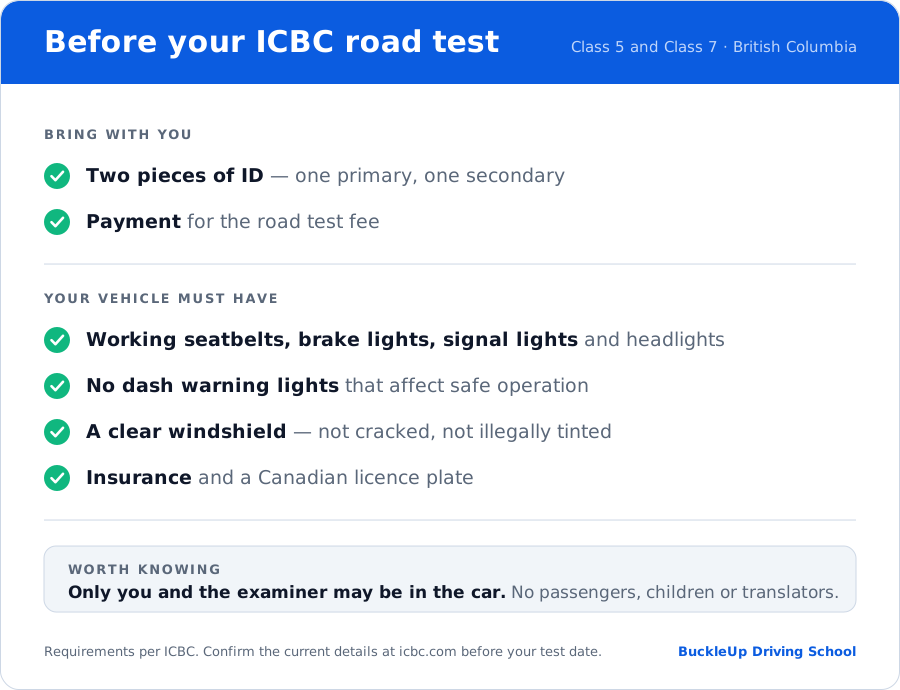
One rule that surprises people every year: only the examiner and the person being tested are allowed in the car. No friends, no parents, no children, and no translators. If English is not your first language, that is worth planning around well before test day. We teach lessons in Farsi for exactly that reason, but the test itself is one to one.
If you would rather not gamble on your own car, you can use a driving school car for the road test, which is already set up and known to pass the check.
How to plan your test day
Plan as though the appointment will take longer than the drive, because it will.
- Arrive with room, not in a panic. Enough time to park, check in and breathe before your name is called.
- Check the car the night before. Lights, signals, wipers, mirrors, tires, fuel, plates. If someone is lending you their car, check it yourself rather than trusting that it will be fine.
- Put your ID and the fee in one place. Two pieces of ID, and payment. Not three things to find in the morning.
- Do not cram the route. Practising near the test centre is sensible. Trying to memorise a specific route is not, because ICBC varies them.
- Leave time afterwards. Feedback, paperwork and, if it did not go your way, working out how you are getting home.
One more piece of planning worth knowing: if you need to cancel or rebook, ICBC asks for at least 48 hours’ notice to avoid a $25 cancellation fee.
What happens after the test ends
The examiner tells you the result and talks through what stood out. If you passed, you will get instructions about your upgraded licence, any restrictions, and when the card arrives. If you did not, the feedback is the useful part.
Not passing first time is common and not a verdict on you as a driver. What matters is separating nerves from habits. One serious error usually has a specific cause worth naming: a shoulder check that did not happen, a misjudged gap, a rolling stop. Points lost across many small areas usually means more general practice rather than one quick fix.
Will you even need a second road test?
If you are a novice driver working toward a full Class 5, this is the timing question that matters most, and it is bigger than any single appointment.
From 19 October 2026, most Class 7N drivers with a clean record will not take a second road test at all. A Driving Record Assessment replaces it, and tests booked for that date or later are cancelled by ICBC. The full picture is in our guide to ICBC’s 2026 GLP changes.
So the honest answer to “how long does the road test take” for a lot of BC drivers in 2026 is: it may not take any time, because there may not be one.
Practice makes the minutes easier
Because the drive is short, every minute of it feels significant. That is not a reason to drive stiffly. It is a reason to build habits solid enough that you can drive normally and still show the examiner what they need to see.
Practise real driving rather than isolated tricks: residential streets, busier corridors, school zones, multi-lane roads, parking lots, and neighbourhoods you do not know. Practise in light rain and at dusk when it is safe to. The goal is simply fewer surprises.
If you want an honest read on where you actually are, that is what a mock test is for. Our Class 5 lessons and road test preparation run a realistic route out of the same office your test starts from, scored the way an examiner would, with the feedback afterwards rather than coached through. If you are still at the novice stage, Class 7 road test preparation covers the earlier test.
The takeaway
Think of the road test as a short, focused sample of your ordinary driving: usually 30 to 45 minutes behind the wheel, inside an appointment closer to an hour. The exact timing depends on which test you are taking, where you are testing, the traffic, the weather, and whether anything comes up before you set off.
The way to feel ready is to prepare past the stopwatch. Confirm what ICBC needs, bring the right documents, turn up in a car that will pass the check, and practise the things that are actually being assessed. Once the shape of the appointment is familiar, the length of it stops mattering.